What would it look like if every corner of higher education—not just the classroom—were shaped by safety, trust, collaboration, empowerment, equity, resilience, and care?
That’s the question at the heart of a new book my wonderful colleague, Kim Hardner, and I are co-creating: Trauma-Informed Transformations in Higher Education: Integrating Principles Beyond the Classroom.
This project grows out of conversations with educators, administrators, and staff who are reimagining systems and relationships through a trauma-informed lens. They’re crafting policies that prioritize well-being, redesigning advising and support services, and creating communities that value equity and belonging as much as academic achievement. Our goal with this book is to bring those diverse voices and practices together in one place to learn from one another and to inspire broader systemic change.
And if you know someone who’s leading trauma-informed change on their campus, please share the call with them. The more voices we bring together, the stronger this transformation becomes.
Check out the newest video from the Institute for Trauma, Adversity, & Resilience in Higher Education at MassBay Community College exploring procrastination through a trauma-informed lens.
Check out this new 5-minute video from The Institute on Trauma, Adversity, and Resilience on the rationale for trauma-informed approaches in higher education!
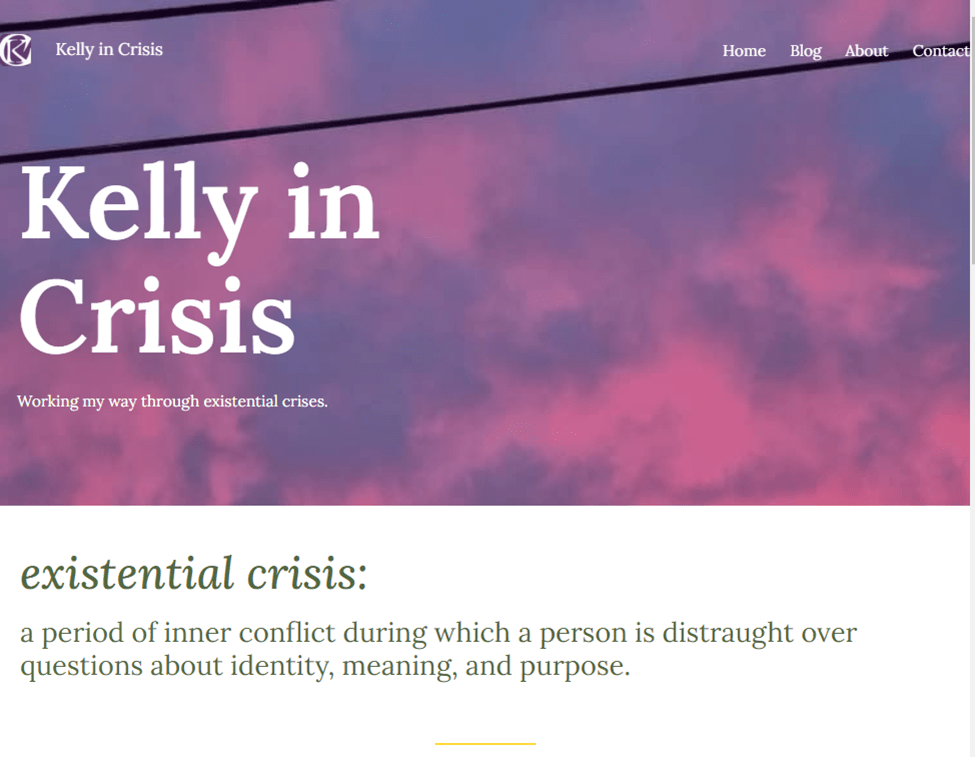
Connecting and collaborating with compassionate people doing meaningful work and making a difference in the lives of others is always inspiring. I am grateful for my recent opportunity to be interviewed by Kelly from Kelly in Crisis as part of her exploration around trauma-informed living. In the interview, Kelly invited me to share what it means to me to be trauma-informed in the context of college teaching and learning. You can check out the interviewand learn more about Kelly at kellyincrisis.com
I’m also curious what it means to others to be trauma-informed. Let me know your thoughts.
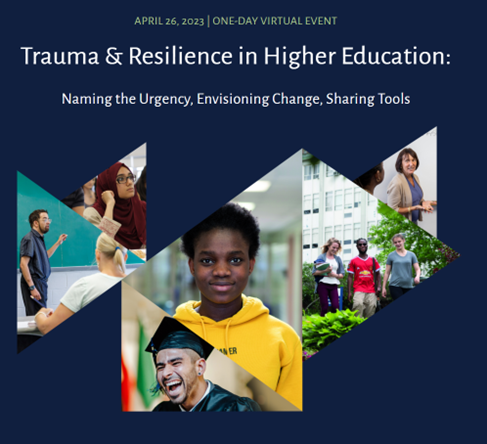
This is the conference on trauma and resilience in higher education that many of us have been wishing and waiting for!
I’m so grateful for the time, energy, and love that Dr. Jeanie Tietjen and the folks at Institute for Trauma, Adversity, & Resilience in Higher Education at MassBay Community College have put into organizing and hosting this conference. I am also honored to be participating as one of the conference speakers.
I encourage you to check out the book’s Front Matter which includes the table of contents, contributor bios, and a thoughtful and thought-provoking foreword by Dr. Laura Quiros.
A collection of examples of evidence-based and field-tested trauma-informed teaching tools and other resources are also included in the books’ Back Matter which is available as a free pdf download.
I am deeply grateful for the opportunity to collaborate with Phyllis, with our many compassionate contributors, and with our publisher, Palgrave Macmillan. Connecting with other educators and learning about the meaningful work they are doing inspires and sustains me. I look forward to continued conversations about trauma-informed teaching in higher education.
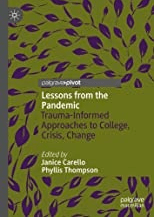
My co-editor Phyllis Thompson and I received so many compelling responses to our call for submissions that our book project turned into two books. The first book, Lessons from the Pandemic: Trauma-Informed Approaches to College, Crisis, Change, is now available. The second book, Trauma-Informed Pedagogies: A Guide for Responding to Crisis and Inequality in Higher Education, will be available in 2022. So grateful for the opportunity to collaborate with so many passionate and compassionate educators.
Lessons from the Pandemic abstract:
This collection presents strategies for trauma-informed teaching and learning in higher education during crisis. While studies abound on trauma-informed approaches for mental health service providers, law enforcement, nurses, and K-12 educators, strategies geared to college faculty, staff, and administrators are not readily available and are now in high demand. This book joins a conversation in place about what COVID-19 has taught us and how we are using what we have learned to construct a new discourse around teaching and learning during crisis.
Endorsements:
“This book is a gift to higher education. The authors acknowledge the agonizing pain of trauma, especially for those who are on the margins, but center healing and resilience through community, creativity, flexibility, and kindness. Each chapter is rich with practical examples that showcase and celebrate the different ways of knowing. Throughout, we are invited to reflect, to grieve, to celebrate, and above all, to grow.”
—Mays Imad, Ph.D.,Professor, Pathophysiology and Biomedical Ethics, Founding Coordinator, Teaching and Learning Center, Pima Community College, USA
“Global pandemics don’t have silver linings, but they do provide materials for grinding new lenses of perception. In this curated collection of essays, the editors lend us a view of higher education through both a trauma lens sharpened by the COVID-19 pandemic and a pandemic lens sharpened by recognizing diverse trauma histories. There is something here to inform practitioners of every academic discipline.”
—Wallace E. Dixon, Jr., Ph.D., Chair and Professor, Psychology, Founding Director, ETSU/Ballad Health Strong BRAIN Institute, East Tennessee State University, USA
“Lessons from the Pandemic represents an urgent invitation for all stakeholders in higher education to consider vulnerability, disruption, and loss in our communities, and just as importantly testifies to diverse and resilient interventions. Particularly valuable as colleges and universities transition post-pandemic, this deeply thoughtful collection envisions this moment as opportunity: out of crisis, to discern and build upon what we have learned about individuals, communities, and practices, and as Carello and Thompson affirm, “reimagine ourselves as educators.”
—Jeanie Tietjen, PhD, Professor, English, Founding Director, Institute for Trauma, Adversity, and Resilience in Higher Education, Massachusetts Bay Community College, USA
Just a quick blog post to point out the TITL Annotated Syllabus I’ve added to the Resources page. Since the covid pandemic, I’ve been thinking about additional changes I might make. In particular, I’ve been wondering about moving to unlimited late days. So far, limiting the late days has been working very well and tends to help students stay motivated and not fall further behind. I am wondering, though, if it’s the limited number of days or the requirement to email me in advance to let me know that is most motivating for students. I was also thinking I would ask students for their input on the policy so we can negotiate it and finalizing it during the first week of classes.
I would love to hear your thoughts and suggestions. And I’d also love to hear about what other folks are doing. What syllabus changes have you made or are you contemplating?
Thrilled to make an online presentation today with colleagues Matthea Marquart and Johanna Creswell Báez for the Arizona Department of Education! The presentation is titled “Essential Trauma-Informed Online Teaching Tools.” You can use the link below to download to view or download a pdf of our slide deck.



 Trauma-Informed Teaching & Learning